 AI-generated
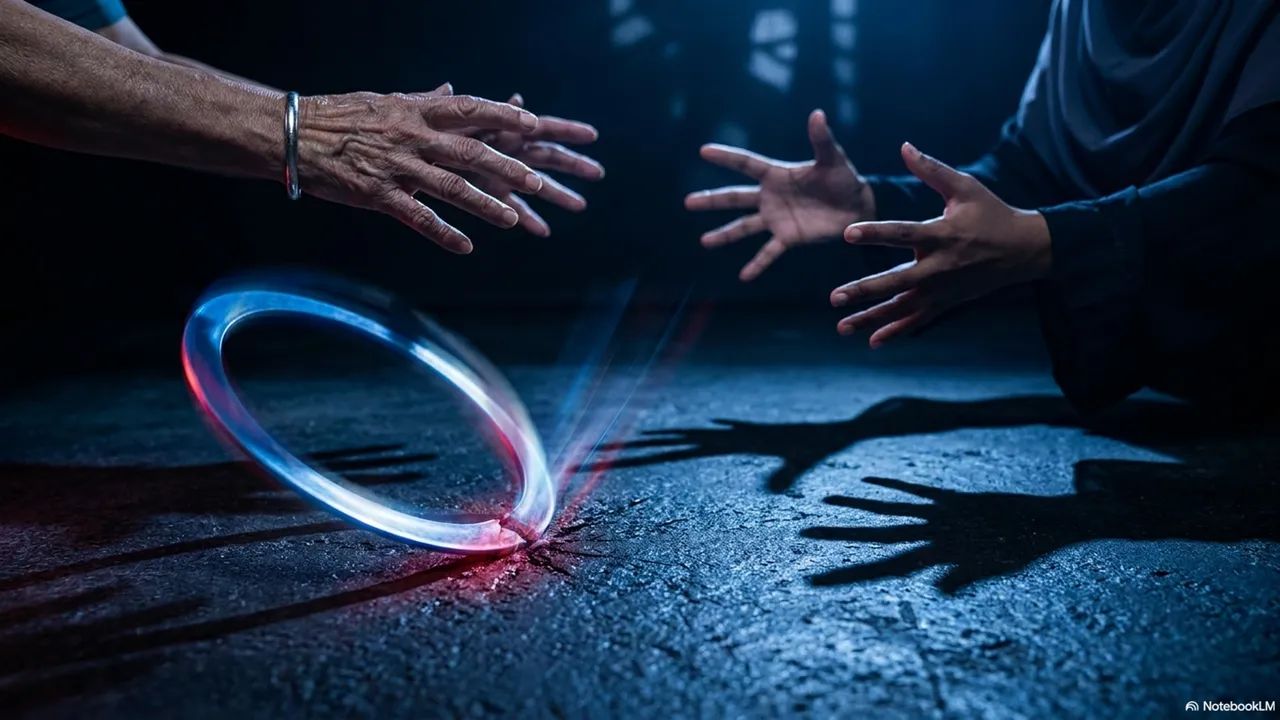
The ring is on the floor.
This much is established. It is down - not in the air, not in orbit, not in a hand. The glowing ring is lying on a dark, wet surface where it has landed.
But now look at what the image shows about that fact.
The ring is still lit. The glow it carries has not gone out. Red and blue light still pool on the surface around it, still illuminate the ground underneath. Whatever the ring holds, it holds it whether it is airborne or not.
And two sets of hands are reaching toward it from opposite sides. Not one person, not one hand. Two people, two directions, simultaneous extension toward the same center. Their shadows on the floor double the image: four hands visible, four shadows below them. Eight points of contact directed at one ring.
The image is not about the drop. It is about what happens next.
What “dropped” actually means in a change program
When something falls in an organisation - a deadline missed, a team that has gone quiet, a process that was meant to land in Q2 still unimplemented in Q4 - the first instinct is often to understand the cause before recovery begins.
Who was responsible? What went wrong? Why didn’t anyone escalate when the timing started slipping? These are not irrelevant questions. But they are not the first question.
In juggling, the attribution of the drop is structurally irrelevant to the recovery. The ball went down. You pick it up. You throw it again. The throw you make now is the only throw that exists at this moment. The drop that just happened is already in the past. What matters is what you’re throwing next.
The two hands in the image are not reaching toward the ring in order to determine which one of them dropped it. They are reaching toward it because it needs to be picked up.
Why two hands matters
One hand reaching could retrieve the ring. A single leader, a single email, a single town hall could technically complete the physical action of picking up what dropped.
But the image shows two. And the doubling changes the meaning of the gesture.
When recovery is one-sided - when the change program reaches for the disengaged team without the disengaged team reaching back, or when the disengaged team reaches back without the change program meeting them - the ring is retrieved but the structure that dropped it is unchanged. The ring will go back into orbit, and the same conditions that produced the drop will still be present.
Two-sided reaching establishes something different. It establishes that both parties registered the drop and both parties chose to move toward the ring. The shared act of reaching is itself the beginning of a changed timing structure.
The ring on the floor did not become less valuable when it fell. It is still lit. It still holds what it held. The work of recovery is retrieval - not reconstruction.
What the light on the floor tells you
The ring’s glow illuminates the ground around it. You can see the surface clearly in the image only in the area where the ring is lying. Everything outside the ring’s immediate vicinity is dark.
This is what a disengaged team looks like when you pay attention to what they’re actually doing rather than to the absence they seem to represent. The ring is on the floor. But the light it carries is still active - still illuminating the territory it occupies, still available to anyone who reaches toward it from either direction.
The change program that interprets quiet as absence has misread the image. The outer-orbit team that has gone silent has not gone dark. They have gone still. The light is still there.
Read next: Everything in the Air at Once - what the orbital framework looks like when all three props are moving.