Siteswap 3
The Cascade
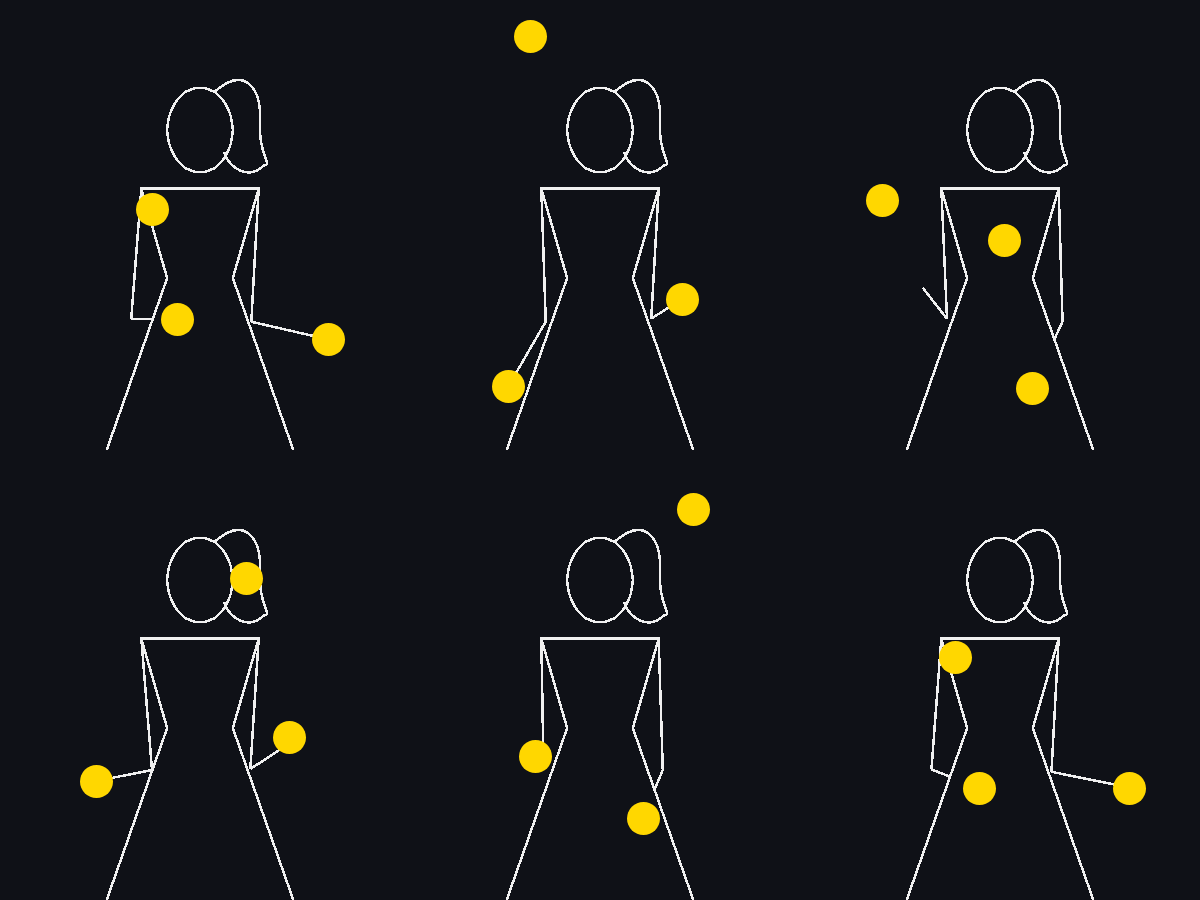
The foundation. Siteswap 3. Every throw takes 3 beats. The pattern studied in the grey matter research.
Siteswap 3. Three objects, two hands, one repeating arc. Every other juggling pattern is a variation, extension, or interruption of this one. Learn the cascade and you learn the grammar of all juggling.
The notation
Siteswap is a mathematical notation for juggling patterns invented independently in 1985 by multiple jugglers. The number assigned to each throw represents how many beats elapse before that object is thrown again. A 3 means: throw it, wait 3 beats, it comes back to a hand. In a cascade, every throw is a 3.
The elegance is in the implication. If every throw is a 3, then at any given moment, exactly one object is in each hand and one is in the air. The pattern is in a constant state of managed transition. Nothing is ever stationary for more than a beat.
In a three-ball cascade, the balls travel in a figure-eight path. The right hand always throws to the left. The left hand always throws to the right. The crossing point at the center is where the pattern lives - the moment where everything is simultaneously in transition.
You are the center of the figure eight. Not moving through it - holding it. The pattern does not happen to you. It is built around you. The juggler's position is the origin point from which all arcs are defined.
In a solo cascade, you own all three objects. You control every throw, every arc, every catch. The feedback loop is instant and private. Drop it - you know immediately. Recovery is your own responsibility and your own resource.
In a club passing pattern, the throws that cross between jugglers are shared contracts. You can not recover a bad pass on your own. The throw left your hand. What happens next is determined by the protocol both of you agreed to before the pattern started.
Individual work is a cascade. You set the arc, catch the result, self-correct. Collaborative work is a pass. Once the handoff is in the air, you can not retrieve it. The quality of the pass was determined by the protocol you established before you threw.
Teams that try to run collaborative work like a solo cascade keep reaching for passes that have already left the other person's hand. The right question is not "how do I fix this catch?" It is "what did we agree the throw would look like?"
The parabolic arc is the one everyone knows - throw up, come down, gravity decides the curve. But juggling also uses looping throws (where the prop rotates through a tighter circle) and linear throws (where the prop moves in a direct horizontal path).
Each arc type maps to a different communication structure. The parabola is announcement - broadcast, one direction, no guarantee of receipt. The loop is iteration - same content, tighter cycle, more feedback. The line is direct communication - one sender, one receiver, explicit handoff.
Parabolic arc
Announcement / broadcast - visible to all, timed release
Loop throw
Iterative - same arc, shorter cycle, more correction opportunities
Linear pass
Direct - explicit handoff, bilateral protocol, no broadcast
Every pattern below is built on the same foundation: the three-ball cascade. Each one changes one parameter - height, sequence, or multiplicity - while preserving the underlying arc structure.
Siteswap 3
The foundation. Siteswap 3. Every throw takes 3 beats. The pattern studied in the grey matter research.
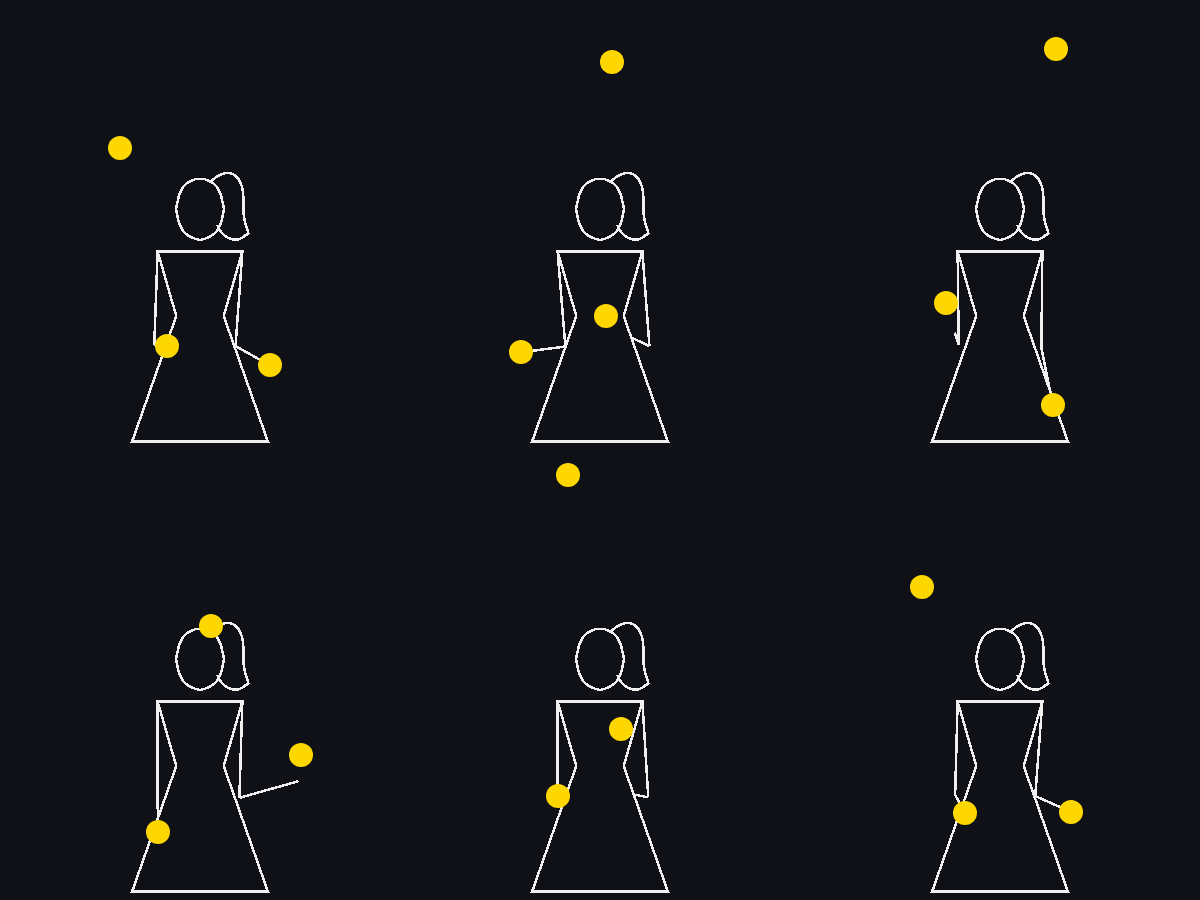
Siteswap 423
A cascade with one higher throw. The 4 buys time to adjust - a built-in recovery beat.
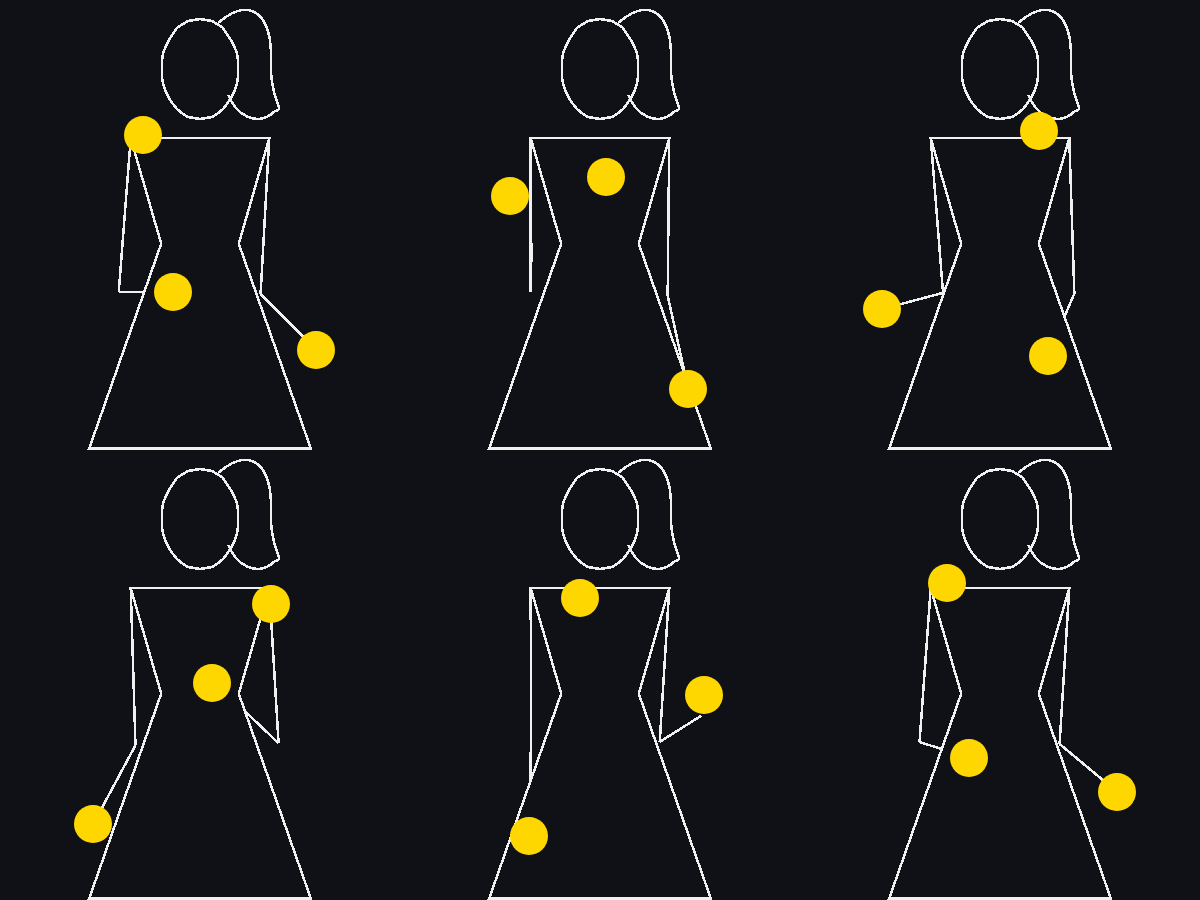
Siteswap 531
Three heights in sequence. The 5 requires early planning. The 1 is almost already in the hand.
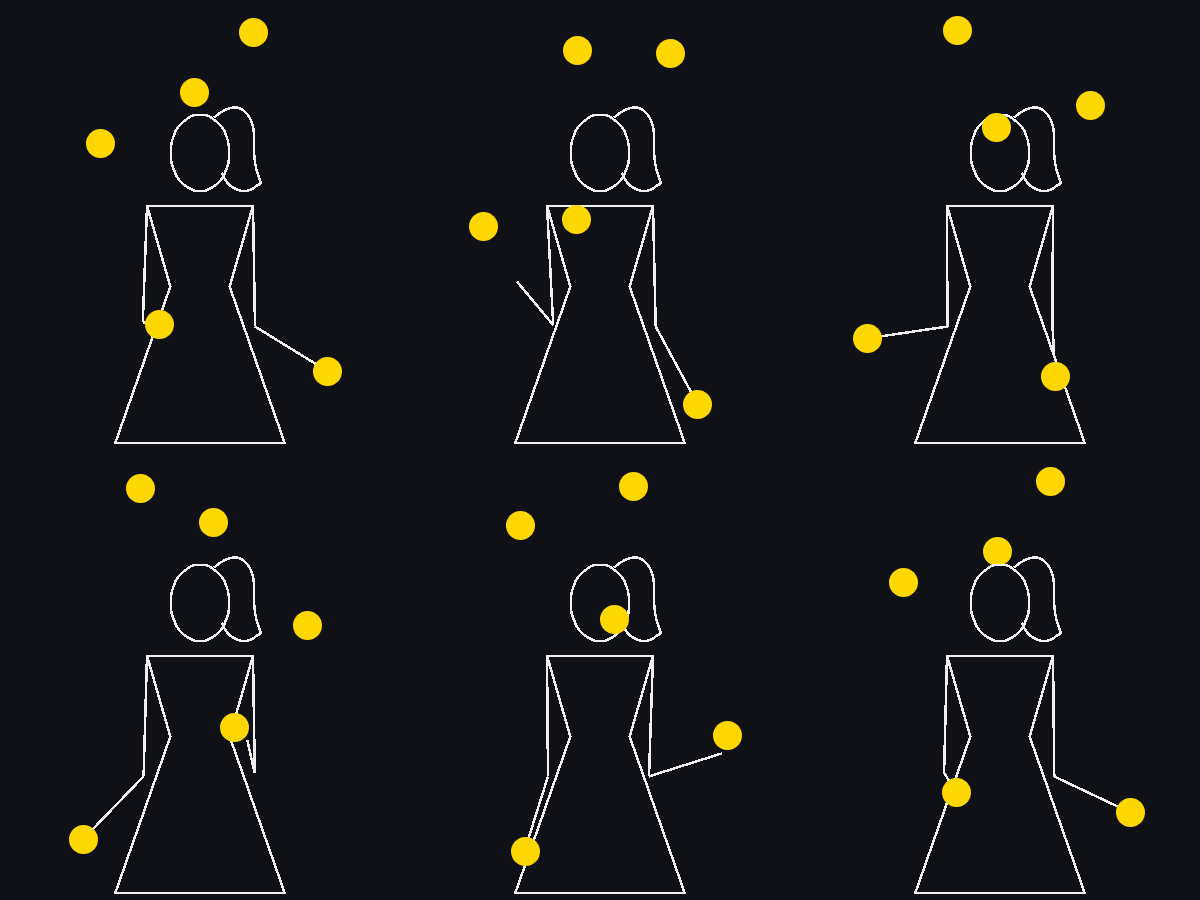
Siteswap 5
Same pattern, five objects. Higher arcs, faster tempo, smaller margin. The same grammar, more demanding.
The image shows three light trails held by a single pair of hands: a large orange semicircle, a blue infinity loop, and a jagged purple zigzag. The same hands. Three completely different trajectories. Change never travels in straight lines - but not all non-linear movement is the same.
ReadThe image is a diptych: on the left, one pair of hands with three silver balls in a solo cascade; on the right, two pairs of hands with clubs crossing between them. The cascade coordinates inside one person. The club pass coordinates between two. These are not two levels of difficulty. They are two different architectures.
ReadThe long-exposure image shows a person at the center of an infinite figure-eight, glowing balls orbiting in arcs of orange and cyan. The person is not moving. The balls are moving. The juggler's skill is not in chasing what's in the air - it is in remaining stable enough that the pattern can orbit them. This is the geometry of sustained performance.
Read