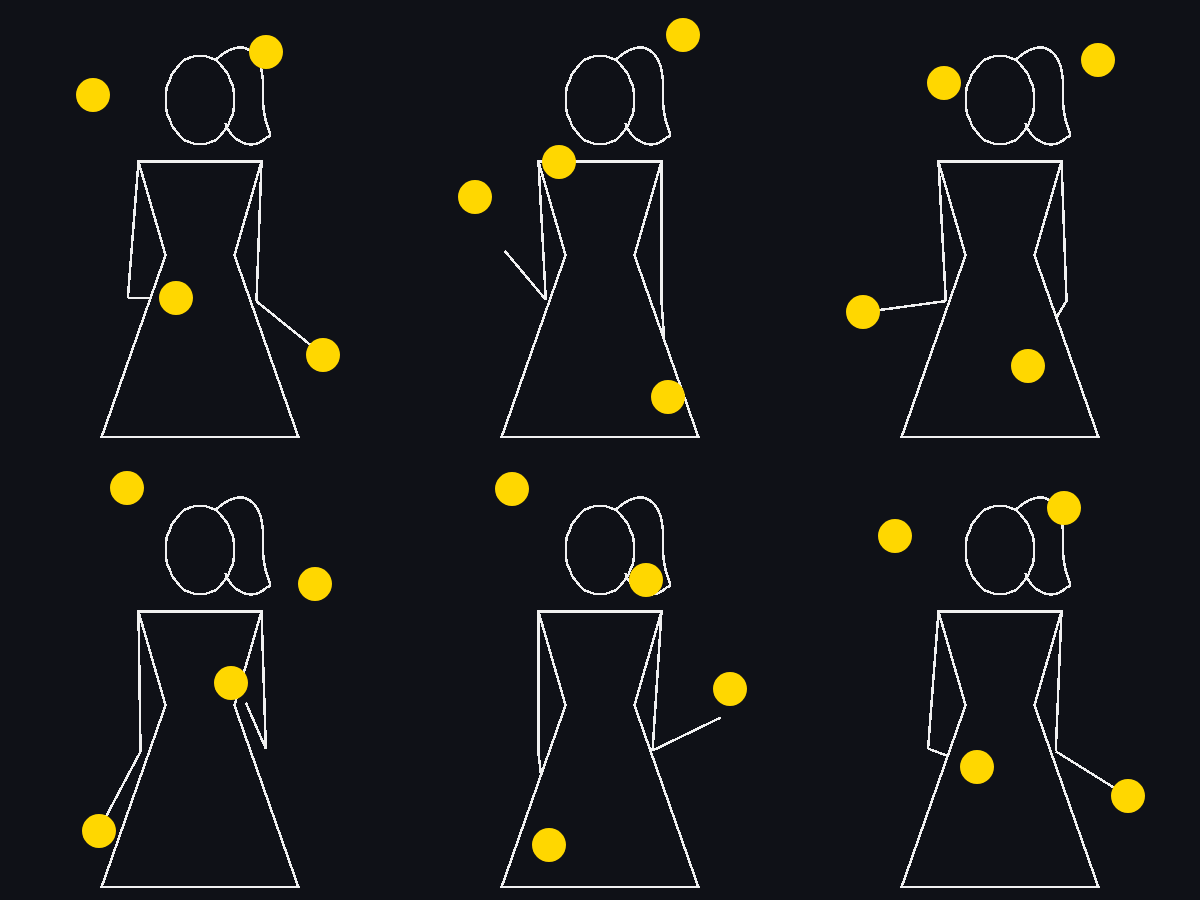
Siteswap 3
The Cascade
The infinite loop in its simplest form. Left throws right, right throws left, gravity returns. No end state.
Simon Sinek defined the infinite game as one with no declared winner, no fixed rules, and no terminal point. Juggling has always been this. You do not age out. You do not finish. You continue throwing until you choose to stop.
The framework
In a finite game, the goal is to win. There are fixed rules, fixed players, and a declared endpoint. In an infinite game, the goal is to keep playing. Rules can change. Players can change. There is no endpoint by definition.
Finite
Mastery declared
Infinite
Mastery is a direction, not a destination
Finite
Skill ceiling reached
Infinite
The next pattern is always one level higher
Finite
Age-out point
Infinite
Neuroplasticity confirmed at 50-67 (Boyke, 2008)
Finite
Winner determined
Infinite
The only opponent is yesterday's throw
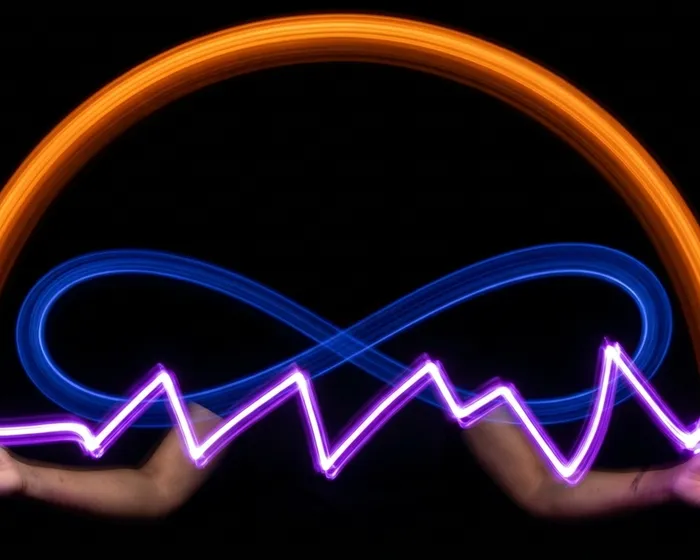 AI-generated
The philosophy
Sinek's framing comes from James Carse's 1986 book "Finite and Infinite Games." A finite game is played for the purpose of winning. An infinite game is played for the purpose of continuing the play. The goals are structurally different, and so are the strategies.
Juggling has always been structurally infinite. There is no score. There is no opponent. There is no terminal state. The dropped ball is not a loss - it is information. The dropped ball says: that arc was not right. Adjust the arc. Continue.
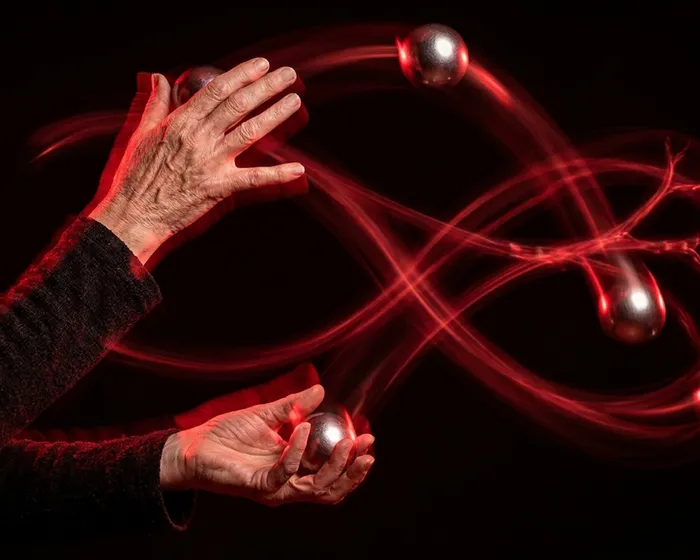
The cascade pattern, viewed from above, traces a figure-eight: a lemniscate, the mathematical symbol for infinity. This is not a designed metaphor. It is the geometry of alternating left-right throws under gravity. The shape is inherent.
The infinite game is not a game about infinity. It is a game about orientation - choosing to see continuation as the point, rather than conclusion. The lemniscate of the cascade is what orientation looks like when it is expressed in physical motion.
For most of the 20th century, the dominant model held that adult neuroplasticity was fixed by middle age. The brain could not build new structural capacity. Learning could happen, but tissue-level change was done.
Boyke et al. (2008) ran the same juggling protocol as Draganski (2004) with adults aged 50-67 specifically because this was where the assumption was strongest. The result was identical: grey matter growth in the mid-temporal cortex, bilaterally, measurable on MRI.
The brain was not fixed. It was waiting to be asked. The infinite game is not a metaphor for brain plasticity - it is a description of it. The brain does not have an endpoint built in. The endpoint was a cultural assumption that science has now falsified.
Anyone who has been told they are too old to learn to juggle has been given a finite game model applied to an infinite game situation. The pattern does not have an age limit. Neither does the brain that runs it.
 AI-generated
In juggling, "inclusive" does not mean everyone juggles the same way. It means every person can find an entry point at their own level, with their own props, at their own pace. The cascade belongs to the person who just learned it as much as to the person who has run it for twenty years.
The infinite game model is structurally inclusive because it has no gate at the end. You cannot be too late. There is no "too late." There is only the current throw, and the next throw, and the one after that. Every entry point is a valid starting point for an infinite path.
No prior athletic experience. No particular age window. No prerequisite coordination. What it requires is willingness to throw and to stand through the early pattern of drop-recover-adjust. The neuroplasticity research confirms what jugglers have always known: the brain adapts to the demand. Provide the demand. The brain handles the rest.
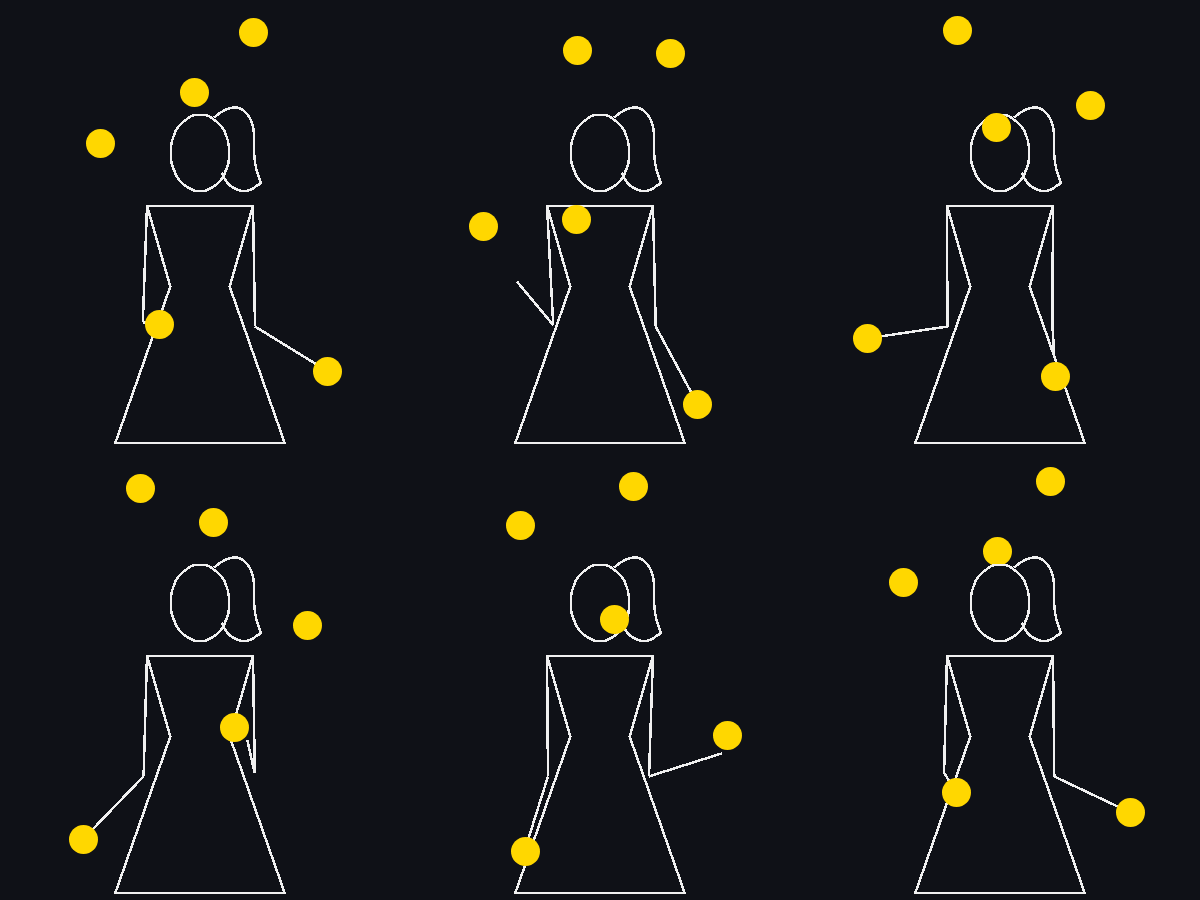
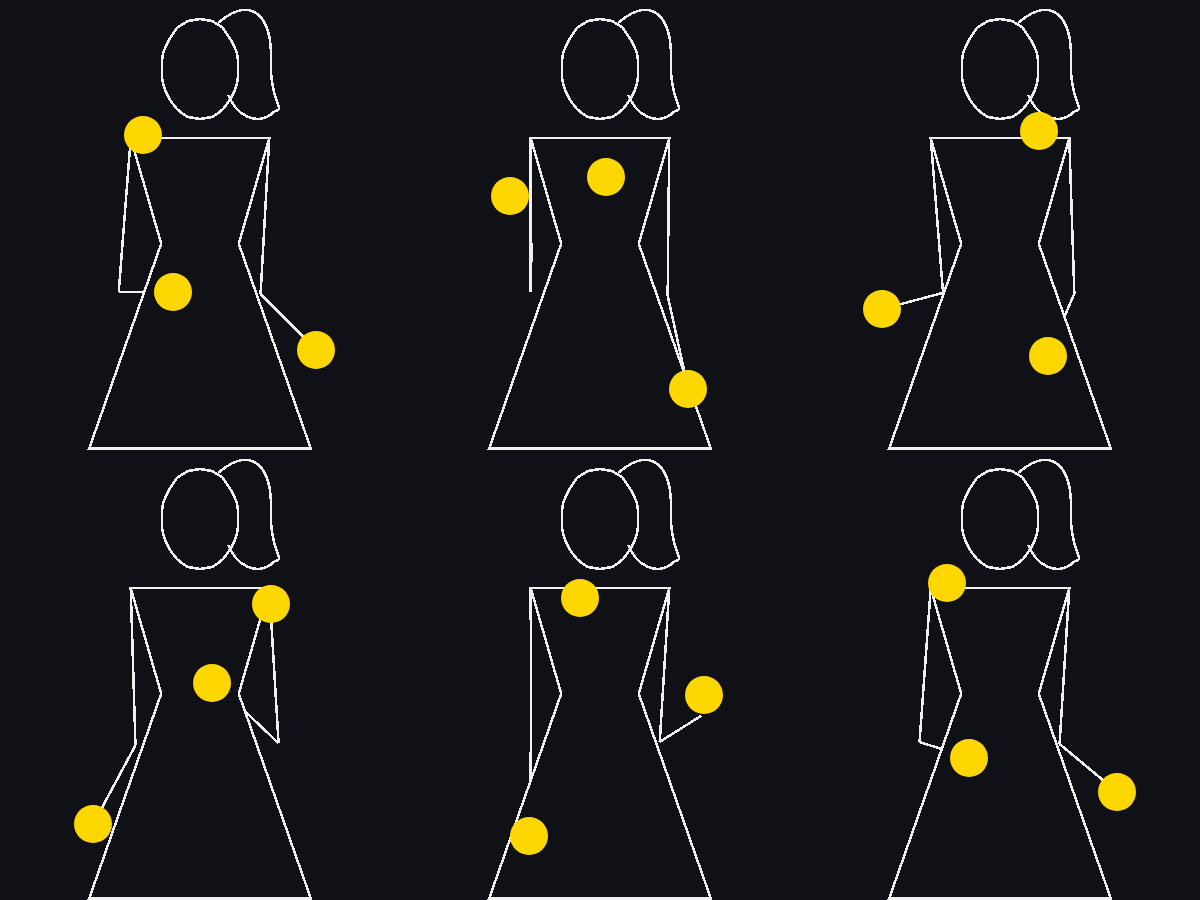
Each pattern below runs continuously until interrupted. There is no final state. The pattern is the point.
Siteswap 3
The infinite loop in its simplest form. Left throws right, right throws left, gravity returns. No end state.
Siteswap 4
Two hands, two parallel loops. Both tracks run at the same time, neither crosses the other. No endpoint.
Siteswap 5
The same arc structure, higher load. Faster tempo, smaller margin. The infinite loop under pressure.
The image shows elderly hands juggling, with red infinity light trails looping between them. The wrinkles are not hidden. The pattern is the same - the same arc, the same weight, the same orbit. The research says what the image shows: the brain that has been practicing for decades is not done growing.
ReadSimon Sinek's infinite game framework - built on philosopher James Carse's work - describes a game with no endpoint, no fixed rules, and no final winner. The cascade fits this description exactly. You do not win at juggling. You maintain the pattern, extend it, and pass it on. This connection has not been made in print before.
Read