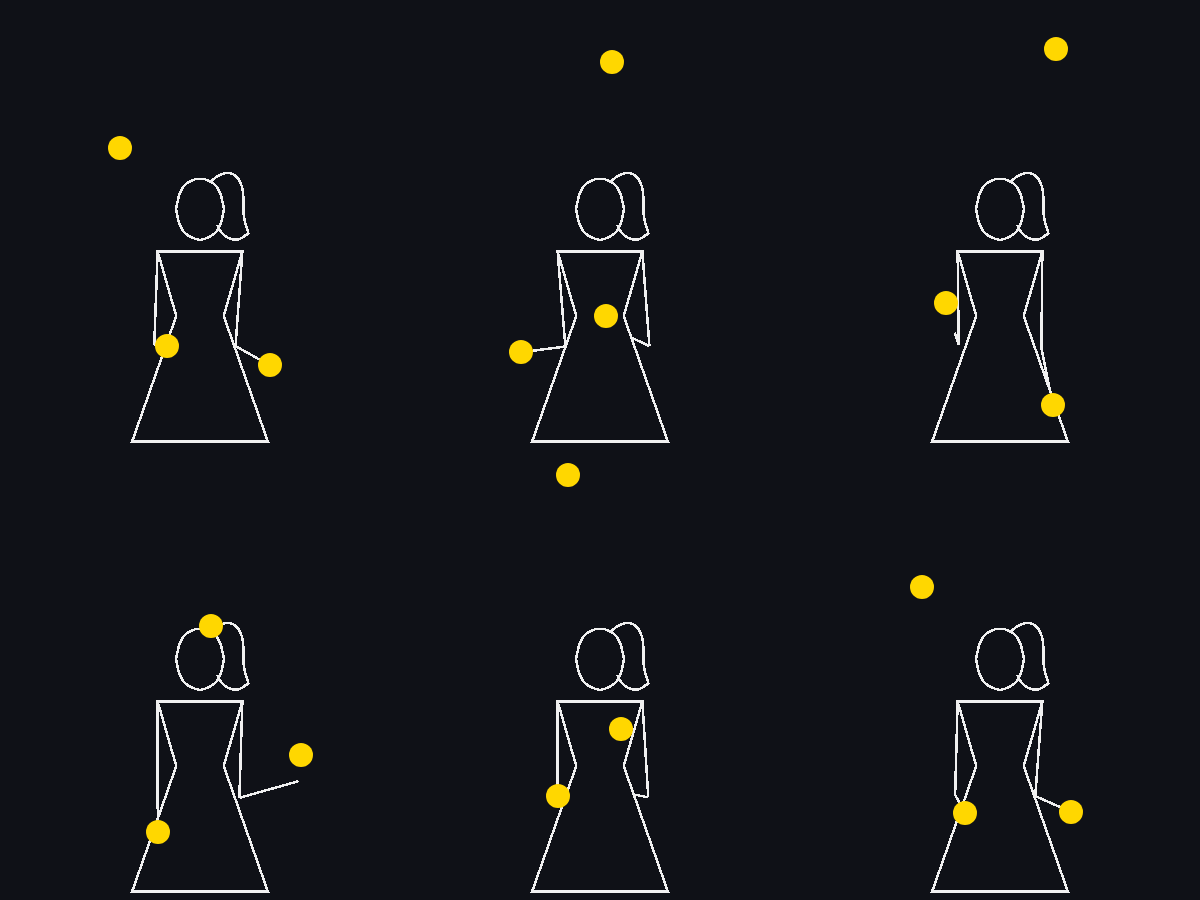
Siteswap 3
The Cascade
Stable change with one concurrent process at a time. Each object has a clear hand and a clear moment.
In any change, every person holds one of three positions: being thrown, being used as the instrument, or staying in orbit. Your position determines what the change feels like - not whether it succeeds.
73%
of change programs fail
McKinsey & Co., global survey of 3,000 executives
3 positions
in every change - ball, club, ring
The orbital geometry framework
The drop
is structural, not personal
Bridges Transition Model, 1991
 AI-generated
The framework
The ball is the thing being changed - thrown, redirected, dependent on the thrower's timing. The club is the instrument of change - it does not choose the arc, but its structure determines what is possible. The ring is in continuous orbit - not thrown, not used, but always in motion, always engaged.
Most change programs fail not because the change was wrong, but because no one mapped who was in each position. The ball thinks the club is attacking it. The ring thinks it has been forgotten. The club has no idea what either is experiencing.
McKinsey's research on change failure consistently returns to the same root cause: people were not brought along. Not lack of strategy, not lack of budget, not technical debt. People in the ball position were not given enough information about the arc. People in the ring were not told their orbit still mattered.
Juggling makes this visible. You can watch it fail in real time. When the thrower does not account for where the catcher is, the pattern collapses. When the ring is left in the wrong hand too long, the rhythm breaks. The failure has a geometry. It can be seen before it happens.
William Bridges identified the neutral zone - the period after the ending but before the new beginning - as the most psychologically difficult stage of transition. In juggling terms, it is the moment between the release and the catch. The object is in the air. Nothing is decided.
When experienced jugglers drop, the pattern shows them where the correction needs to happen. Not in the drop - in the throw that preceded it. The drop is always two beats old. Teams that treat the drop as the problem keep fixing the wrong thing.
When a ring falls in a passing pattern, the juggler who was not holding it is often the first to reach. Not out of obligation - out of proximity. The person nearest the dropped thing is rarely the person who dropped it.
This is the geometry of recovery in teams. The person closest to the failure is often not the owner. Building a recovery culture means creating the conditions where reaching is natural, not heroic.
 AI-generated
 AI-generated
Every juggler has a saturation point - the number of props beyond which the pattern stops being manageable and starts being chaos. For most beginners, it is four. For experienced jugglers, it is wherever the timing compounds beyond recovery speed.
Organisations hit the same point. The problem is never one change - it is concurrent changes whose timings overlap in ways that leave no recovery window. The first change lands. The second starts before the catch. The third is released before anyone confirmed the first.
The ring position - continuous orbit, not thrown, not held too long - is the hardest to maintain at scale. As organisations grow, the people in outer orbit receive less information, more delay, and no formal recovery protocol when they drop.
The juggling model says: the ring is not peripheral. It is the boundary condition. When rings start falling, the cascade is about to fail. Tracking the outermost orbit is the earliest warning system available.
Ball position
Needs arc clarity - where am I going and when
Club position
Needs protocol clarity - what is the handoff structure
Ring position
Needs orbit clarity - is my continuous loop still valued
The drop
Always two beats old - trace it upstream, not at the catch
Bridges (1991) identified something counterintuitive: transitions begin with endings, not beginnings. Before the new thing can start, the old thing has to be released. Not abandoned - released. The difference is in the hands.
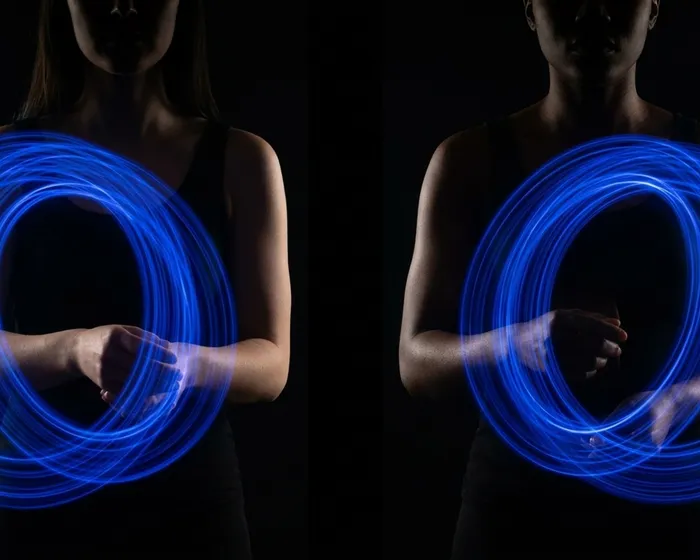
Juggling trains this directly. The release is not the opposite of holding - it is its completion. A throw without a full release does not travel cleanly. A grip that continues past its moment disrupts the next catch.
Organisations that struggle to change are often not afraid of the new thing. They have not fully released the old one. The hands are not empty. The arc cannot form.
 AI-generated
Each pattern below has a change management analogue. The timing, recovery structure, and failure modes map directly onto how teams absorb new work.
Siteswap 3
Stable change with one concurrent process at a time. Each object has a clear hand and a clear moment.
Siteswap 531
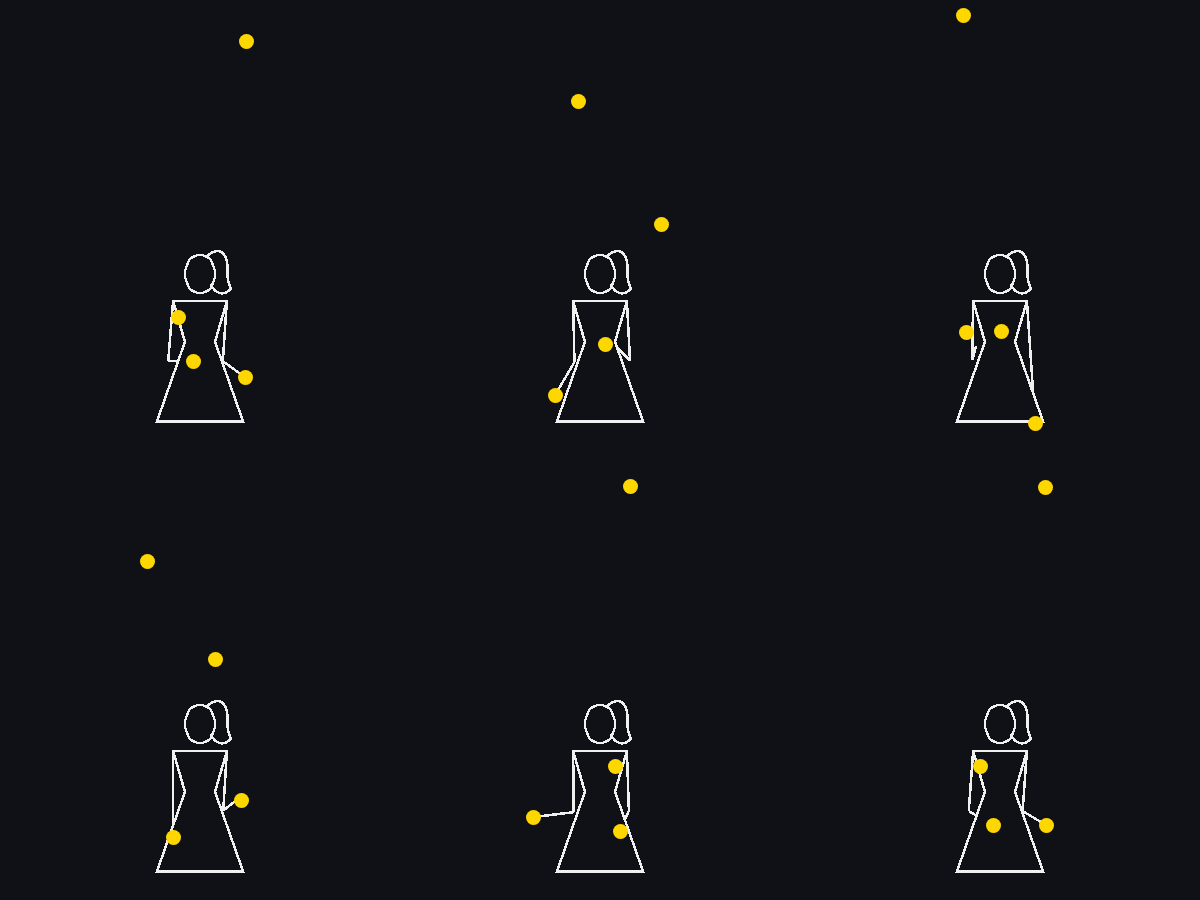
Three different heights. Three different timing windows. The recovery buffer is built into the structure.
Siteswap 633
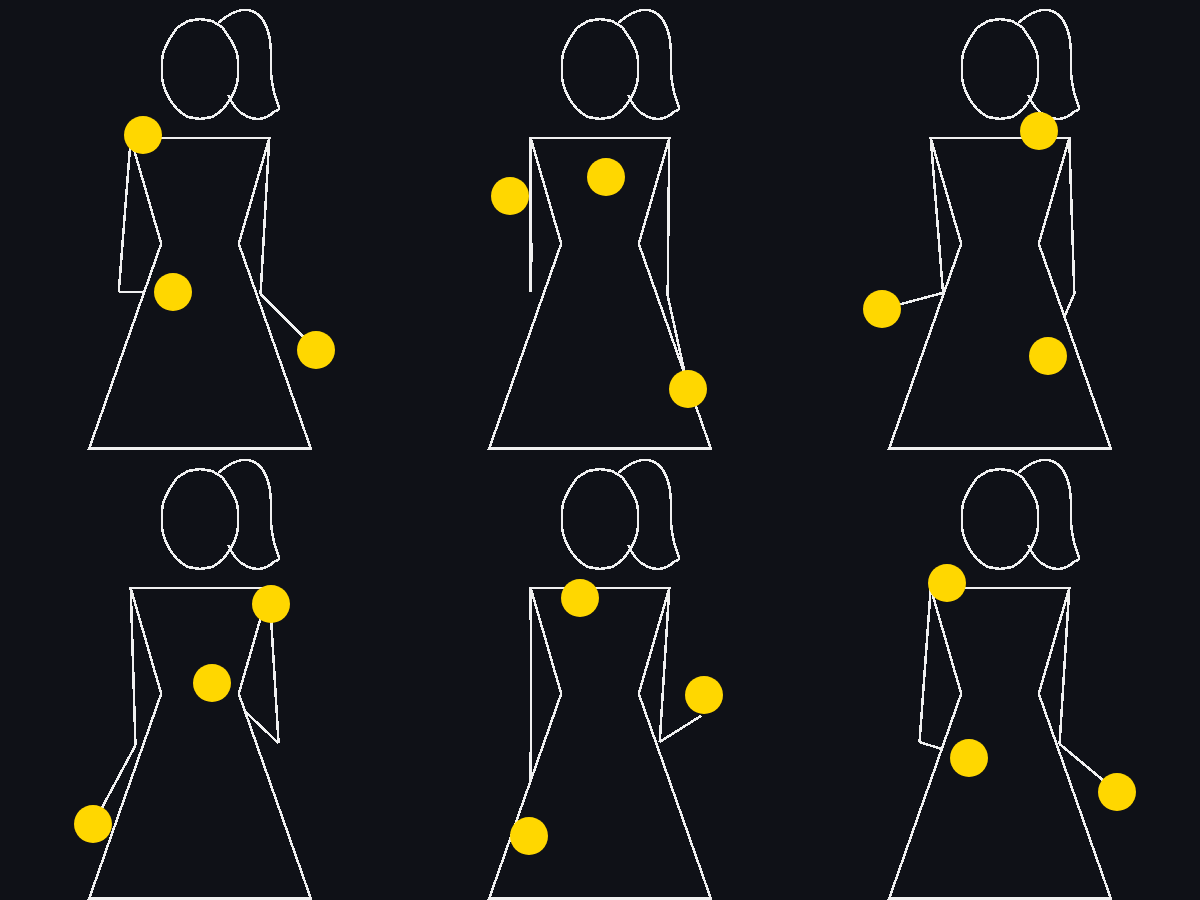
High throw, two mediums, a rhythm that repeats. The organisation that absorbs each major initiative before the next arrives.
The image shows a single hand with a glowing cyan club pointing downward - being released, not held. The club is lit. The hand is open. The moment of release is not the end of the practice. It is the act that makes the next catch possible.
ReadThe image shows two human silhouettes almost invisible inside a field of crossing magenta and cyan light trails - arcs, zigzags, spirals moving in every direction at once. The people are still there. But they have been reduced to outline by the volume of interference surrounding them. This is what change saturation looks like from the outside.
ReadThe image shows a glowing ring lying on the floor with two pairs of hands reaching toward it from opposite sides. The ring is down but still lit. Two people are reaching, not one. The image is not about the drop. It is about what happens next.
Read